
Software Built for Industrial Machinery and Complex Assembly
Industrial machinery manufacturers operate in environments defined by long production cycles, complex assemblies, and strict performance requirements. Standard ERP tools struggle to keep pace with these realities. The Synchrono manufacturing solution is designed to support engineer-to-order and make-to-order operations by coordinating machining, fabrication, assembly, and testing through real-time, constraint-aware scheduling and visibility across the entire production lifecycle.
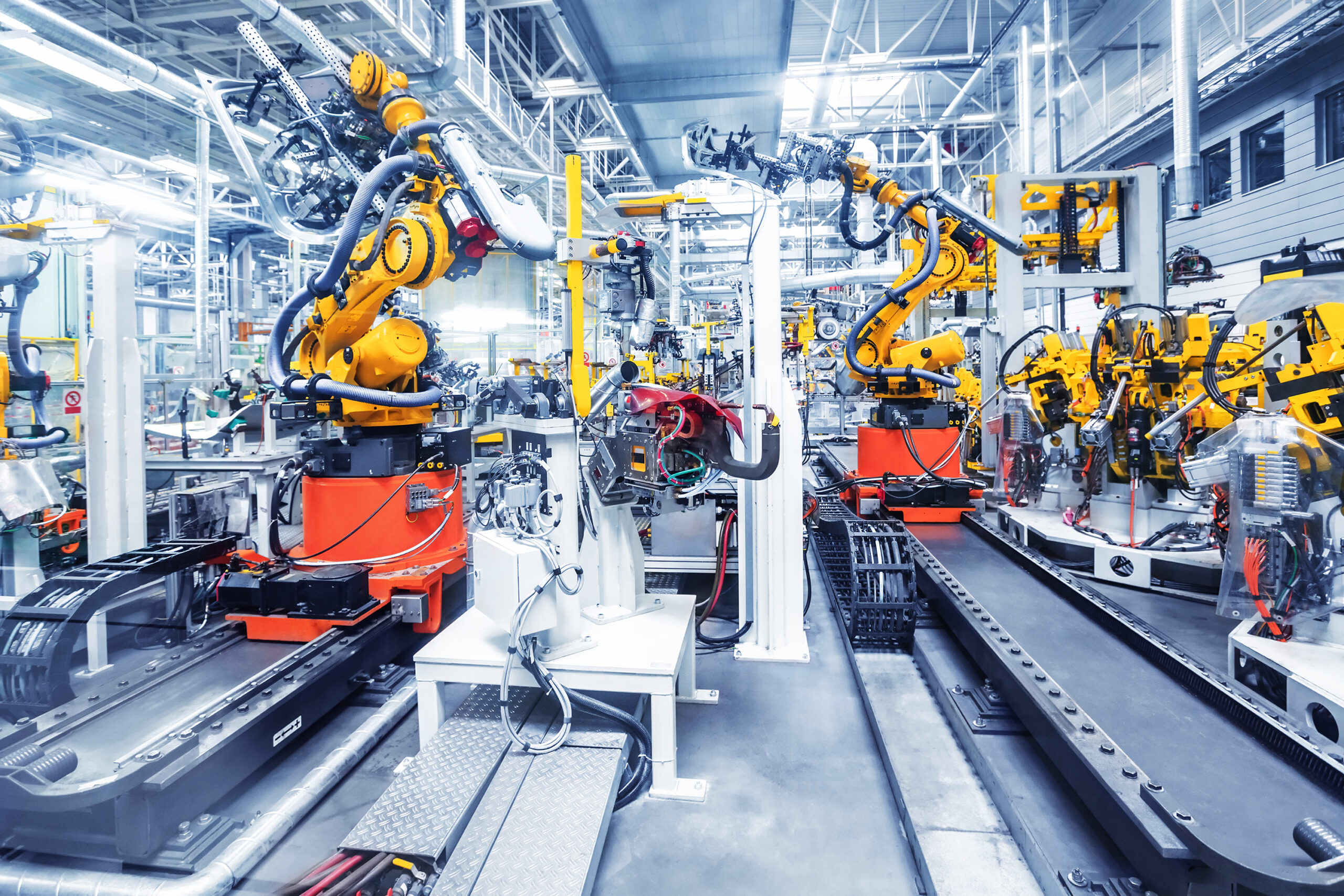
Real-Time Scheduling for Machining and Assembly Operations
Machinery production often faces disruptions like engineering changes, supplier delays, and equipment downtime. Traditional planning assumes infinite capacity, forcing teams to react manually and leading to missed deliveries and unstable workflows.
Industrial equipment manufacturers rely on advanced scheduling logic to dynamically recalculate production plans as conditions change. Using modern APS systems, schedules are continuously updated based on actual capacity, execution feedback, material readiness, and operational priorities. Using APS for industrial equipment, schedules are continuously updated based on actual capacity, material readiness, and operational priorities. This approach supports multi-stage production environments where machining, subassembly, final assembly, and testing must remain synchronized to protect throughput and delivery performance.
APS systems address:
- Late or partial material availability
- Engineering change orders affecting routings or specifications
- Machine downtime or labor constraints
- Rework and inspection holds
- Shifting customer priorities and order urgency
Visibility Across Equipment Fabrication and Testing
Without real-time insight, machinery manufacturers often rely on spreadsheets, status meetings, or shop floor visits to understand progress. These manual methods lag behind reality and make it difficult to anticipate delays before they impact downstream operations. Manufacturing visibility software replaces reactive decision-making with live, shared insight across the plant.
Using production visualization software, teams gain immediate awareness of WIP, work order status, machine readiness, and flow across fabrication, assembly, and testing. Visual indicators of surface delays, quality holds, or backlog accumulation early, allowing teams to act before problems cascade.
Role-based visibility supports:
- Planners monitoring order progress and constraint exposure
- Supervisors managing execution across work centers
- Engineers assessing the impact of design changes on production
- Operations leaders evaluating flow and delivery risk
Multi-Site Manufacturing Coordination
Many machinery manufacturers operate across multiple facilities, with work distributed by capability, geography, or capacity. Coordinating production across sites is challenging when each location plans independently or relies on disconnected systems. Multi-site machinery manufacturing requires shared priorities without sacrificing local execution control.
Industrial manufacturing software unifies scheduling logic across plants while allowing each facility to manage its own resources and execution. Shared visibility into materials, components, and work orders enables better load balancing and coordinated decision-making across regions.
Key coordination benefits include:
- Standardized scheduling policies with local flexibility: Common planning rules ensure consistency across the enterprise while still allowing each plant to adjust execution based on local constraints and conditions.
- Visibility into interplant WIP and shared components: Teams can see where work and materials reside across facilities, helping prevent duplicate effort and reducing delays caused by missing or misallocated components.
- Better Synchronization leads to better schedules: It is critical to overall supply chain performance that production schedules stay aligned across plants. When one component is delayed, this impacts sub-assembly at one facility and final assembly at another. Schedules must be adjusted across locations to avoid bottlenecks and downtime.
Demand-Driven Replenishment for Machinery Components
Machinery builds rely on hundreds to thousands of components arriving exactly when needed. Overproduction ties up capital and floor space, while shortages disrupt execution. Demand-driven manufacturing replaces push-based replenishment with real-time signals tied directly to consumption and production schedules.
Using eKanban software, replenishment is synchronized with machining and assembly schedules rather than forecasts. Signals adjust automatically as priorities change, helping maintain flow without excess WIP. This approach supports industrial equipment flow optimization by stabilizing material availability throughout long production cycles.
Benefits include:
- Reduced stockouts that stall machining or assembly: Real-time replenishment signals ensure components are available when work is released, preventing jobs from stopping mid-process due to missing materials.
- Lower overstock inventory and WIP accumulation: By replenishing only what is needed, when it is needed, manufacturers avoid overbuilding buffers that consume space, capital, and labor attention.
- More predictable material flow through complex builds: Consistent, consumption-driven signals create steadier movement of parts across machining, subassembly, and final assembly operations, even in long-cycle environments.
Integration With ERP, MES, and Plant Systems
Accuracy depends on timely, reliable data. Disconnected systems create gaps that force planners to rely on assumptions instead of facts. ERP/MES manufacturing integration ensures decisions reflect current conditions across engineering, supply chain, and the shop floor.
This approach connects ERP software and MES data for routings, bills of material, WIP status, and engineering changes. Real-time updates from plant systems capture machine state and material movement, ensuring production remains executable for long-cycle machinery programs.
Key integration elements include:
- ERP routing and BOM synchronization
- Engineering change order updates reflected immediately
- Real-time machine and material status capture
Platform Support for Machinery Manufacturing
The Synchrono platform brings together planning, visualization, alerting, and replenishment into a unified environment designed for complex manufacturing operations.
At it’s core, SyncManufacturing APS software, drives feasible, constraint-aware schedules across machining and assembly. Visualization and alerting tools reinforce execution by keeping teams informed and aligned as conditions change.
Supporting capabilities include:
- Manufacturing alerting software to notify teams of shortages, delays, or priority shifts
- WIP and work order tracking tied directly to scheduling logic
- Industrial automation software integration to support data-driven execution
Together, these capabilities support machining and assembly scheduling that adapt in real time while maintaining control across complex operations.
Improve Throughput Across Machinery Operations
Manufacturers that move beyond static planning and disconnected systems gain a clear competitive advantage. Adaptive scheduling combined with real-time visibility allows machinery operations to respond faster, plan with confidence, and execute reliably even as conditions change. By aligning schedules to true capacity and material readiness, teams reduce expediting, strengthen coordination, and maintain predictable flow across long and complex production cycles. Explore proven results through our manufacturing case studies to see how machinery manufacturers have improved performance using this approach.
Organizations that adopt this model consistently improve throughput, schedule adherence, and delivery reliability without adding labor or equipment. With tighter alignment between manufacturing execution and planning functions, and stronger collaboration across engineering, supply chain, and operations, manufacturers create a more resilient production environment built for sustained growth and operational excellence.