
Manufacturing Operations Management Software for Real-Time Control
Manufacturing operations leaders work in environments where change is constant. Labor availability shifts, materials arrive later than expected, and production priorities evolve throughout the day. Manufacturing operations management software built for real-time control gives teams the visibility and coordination needed to respond quickly and keep production moving.
Designed specifically for discrete manufacturing environments, this software connects planning, scheduling, and execution into a single operational view. With real-time insight into schedules, constraints, and production status, operations managers can make informed decisions that support flow, improve coordination, and reduce daily disruption.

What Manufacturing Operations Management Looks Like in Discrete Complex Manufacturing
Operations management in discrete manufacturing is shaped by high product mix, variable demand, and frequent changeovers. Production rarely follows a steady pattern. Instead, teams must constantly balance competing priorities across shared resources, work centers, and shifts.
Effective plant operations management depends on strong coordination between production planning and scheduling and what is actually happening on the shop floor. When schedules reflect current conditions and execution priorities stay aligned with demand, teams can act with confidence. Without this synchronization, operations managers spend more time reacting to issues than managing performance.
Why Traditional ERP and Static Schedules Create Risk
Many manufacturers rely on ERP scheduling modules or spreadsheets to manage daily operations. These tools can generate an initial plan, but they struggle to adjust when conditions change. As disruptions occur, schedules fall out of sync with reality, and teams are left to manage gaps manually.
This creates risk at the plant level. Limited responsiveness makes it harder to address issues early. Delayed visibility into production problems leads to reactive decision-making, increased variation across shifts, and lower confidence in the plan. Over time, teams rely more on workarounds than systems, which reduces consistency and control.
Advanced Planning and Scheduling at the Core
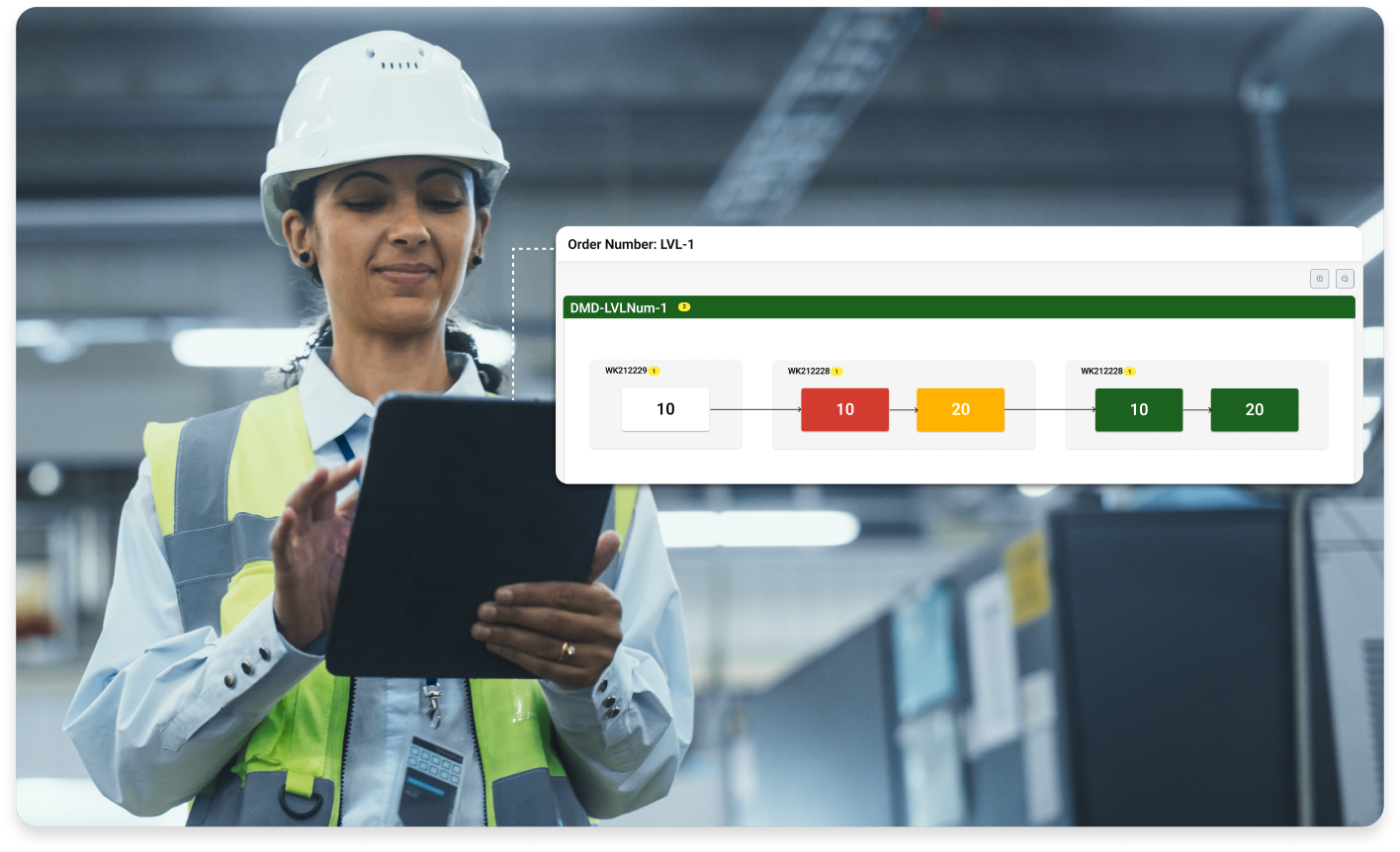
At the center of effective manufacturing operations management is advanced planning and scheduling software that adapts as conditions change. Rather than producing static schedules, scheduling logic recalculates throughout the day to reflect labor availability, machine capacity, tooling readiness, and material status.
Using finite-capacity, constraint-aware logic, schedules align demand with what can actually be produced. This reduces overcommitment and supports steadier flow across constrained resources. Operations managers gain confidence that execution priorities are realistic and achievable. This approach is delivered through advanced planning and scheduling software that connects demand, capacity, and execution within a single operational model.
For organizations evaluating how to improve manufacturing planning and scheduling, this dynamic approach helps replace manual intervention with system-driven alignment.
Real-Time Visibility Across the Shop Floor
To manage operations effectively, leaders need clear insight into what is happening right now. Real-time production visibility allows teams to see execution status, emerging risks, and shifting priorities as they occur.
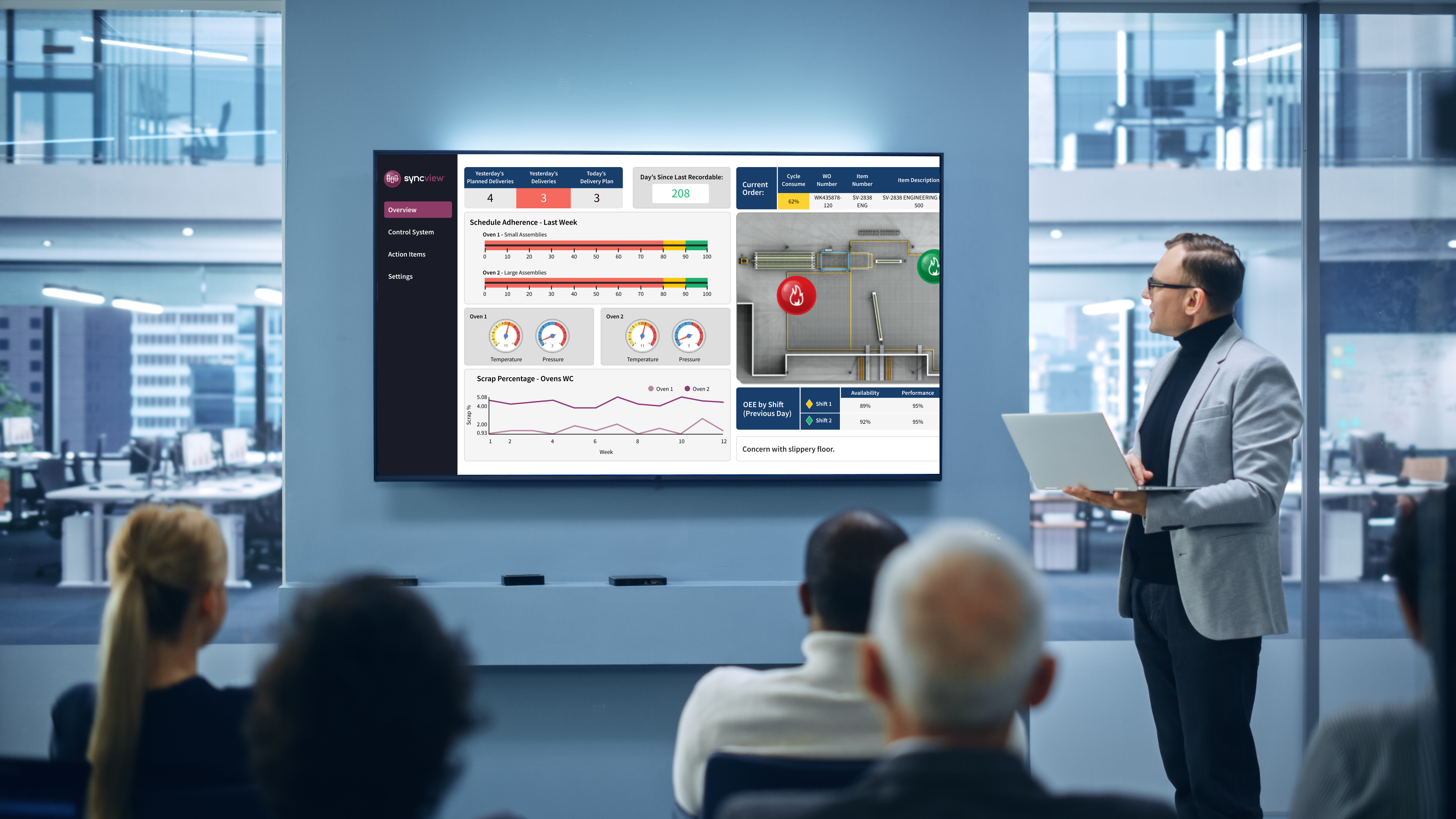
With production visualization tools like SyncView®, operations managers, planners, and supervisors share a common view of work in process, schedules, and constraints. Visual management highlights priorities and exceptions so teams can focus on the issues that matter most. This shared visibility improves coordination across operations, planning, and leadership, reducing the need for manual status updates and floor walks.

Supporting Demand-Driven and Pull-Based Manufacturing
Many manufacturers are moving toward demand-driven manufacturing to improve flow and reduce excess work in process. With today’s volatile demand, supply chain disruption, and shorter customer lead-time expectations, manufacturers need production systems that can respond quickly without relying on static, forecast-driven plans. In this model, production is guided by actual demand signals rather than long-range forecasts that may no longer reflect reality.
Pull-based manufacturing supports this approach by releasing work based on downstream readiness and current conditions. As demand changes, schedules adjust to maintain alignment across shared resources. This reduces schedule churn and helps operations teams spend less time firefighting. Teams looking to strengthen this approach often rely on demand-driven manufacturing resources to better understand how planning and execution can stay aligned.
How Synchrono Software Supports Plant Operations Managers
Plant operations managers need systems that do more than generate plans. They need tools that reflect what is happening on the shop floor right now and help teams respond quickly as conditions change. Synchrono provides an integrated software platform that connects planning, scheduling, execution, visibility, and material flow into a single operational environment. This integration helps operations teams maintain alignment across functions while making informed decisions throughout the day.
Each component plays a clear role in enabling real-time control on the shop floor, supporting consistent execution even in complex and fast-changing production environments.
- SyncManufacturing® supports production planning and scheduling by connecting demand, capacity, and execution into a single plan that updates as conditions change. This gives operations managers confidence that schedules reflect what can actually be produced.
- SyncAlert® provides real-time production alerts, notifying teams when events like material shortages, equipment issues, or missed operations[GU1] [GU2] occur. These alerts are routed to the right people, so issues can be addressed quickly without relying on manual monitoring.
- SyncView® offers shared visibility by presenting live production data in clear, visual dashboards that highlight manufacturing metrics that matter to you
- SyncKanban® ties material replenishment directly to production signals through electronic Kanban. This pull-based approach helps stabilize material flow, reduce excess inventory, and support smoother execution across the shop floor.
Together, these capabilities provide practical shop floor decision support for operations managers navigating complex, fast-changing environments. By keeping schedules realistic, visibility shared, and responses timely, teams can focus less on reacting to problems and more on maintaining steady, reliable production performance.
Built for Complex Discrete Manufacturers
As organizations grow, operations management becomes more complex. Shared resources and long planning horizons increase the need for systems that adapt quickly without adding administrative burden.
Our manufacturing software supports environments where coordination across sites is critical. Dynamic scheduling and shared visibility help maintain consistency across facilities while allowing local teams to manage site-specific realities. Manufacturers operating at scale benefit from systems that support frequent change while maintaining alignment across the organization.
Start Improving Manufacturing Operations Management Today
Operations leaders evaluating manufacturing operations management software need a clear path forward. For discrete manufacturers comparing manufacturing execution alternatives, value comes from solutions that improve daily execution, support informed decisions, and scale as complexity grows. Synchrono software helps teams see results quickly by aligning planning, scheduling, and execution around real operating conditions, while providing a platform that supports long-term operational improvement.