
Real-Time Dynamic Scheduling for Discrete Manufacturing
Dynamic scheduling software continuously adapts production planning and scheduling in real-time, synchronizing all activities and resources with actual demand rather than assumptions. By recalculating schedules whenever conditions change, discrete manufacturers gain a synchronized operation that is faster, more reliable, and better equipped to deliver on customer commitments.
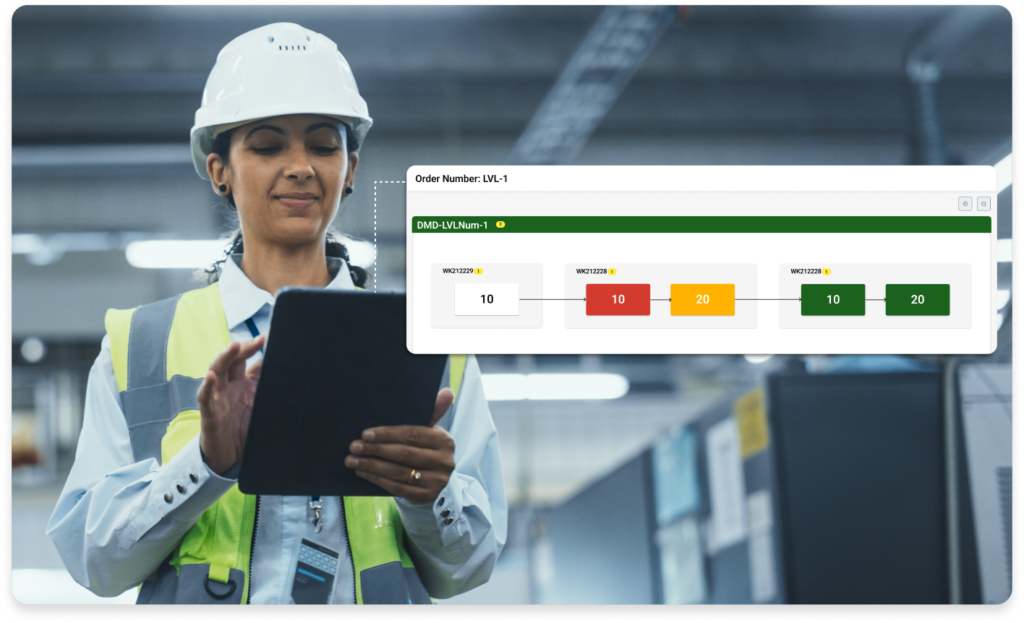
How Dynamic Scheduling Works in Real Time
Dynamic scheduling responds the moment production conditions shift.
When priorities, material readiness, staffing, or equipment availability changes, the system recalculates instantly and updates sequences across orders and work centers. These adjustments cascade throughout operations, ensuring everyone is aligned to the most current plan so manufacturers are working from accurate and actionable data.
- Real-time capability means schedules remain feasible and actionable at all times.
- Priority- and constraint-aware logic strengthens promise-date confidence while giving planners and supervisors the ability to respond faster and with fewer manual interventions.
- Combined with demand-driven manufacturing insights and advanced planning and scheduling software, teams gain greater control over production flow and more predictable outcomes across every manufacturing process.
Finite-Capacity Planning for Complex Operations
Finite-capacity planning ensures production schedules are grounded in reality. By referencing capacity limits, calendars, material readiness, and routing requirements, teams generate plans that match what the plant can actually build—no guesswork or overloading. These principles align closely with lean manufacturing methodologies and constraint management principles to support constant flow.
Capacity and Resource Alignment
Plans reflect labor, shift patterns, and machine availability, so production teams know exactly what resources are available at any given moment. This prevents overloads and ensures schedules remain feasible as conditions evolve.
Material and Operation Readiness
The system checks upstream steps to confirm that work can begin, reducing delays caused by missing components or incomplete operations. These readiness checks also strengthen manufacturing performance metrics tied to flow, availability, and readiness.
Constraint-Aware Sequencing & Execution
Detailed operational logic ensures accurate sequencing, accounting for setup times and process dependencies. This results in smoother work-center coordination and more efficient production execution.
Feasible Schedules & Real-Time Prioritization
Schedules adapt in real time to prioritize high-value orders while remaining fully executable—reducing rework and improving delivery performance.

Align Schedules to Demand with Pull-Based Methods
Real-time production scheduling supports demand-driven / pull-based methods by sequencing work based on what customers need now, not weeks in advance. Aligning release of work to customer demand and system capabilities supports flow, reduces shop floor congestion, and dramatically reduces the need for reactive expediting.
By keeping execution closely aligned with demand signals, manufacturers lower WIP levels, shorten cycle time, and maintain steadier throughput. This synchronization also supports supply chain risk management by reducing uncertainty and improving timing precision across production and procurement activities.

Proven Impact in Complex Manufacturing Environments
For a global semiconductor testing leader, real-time dynamic scheduling delivered measurable results — and a lasting competitive edge.
Dynamic Scheduling for The Enterprise
Dynamic scheduling supports multiple teams and decision-makers by creating a shared, real-time foundation for planning and execution. This alignment improves coordination, reduces delays, and increases responsiveness.

VP / Director of Operations
Uses real-time insights to align output with demand and strengthen service levels. Gains the ability to analyze long-term patterns that guide strategic investments and continuous improvement.
Plant Manager
Oversees resource coordination and ensures execution follows current priorities. Relies on accurate data to maintain smooth flow and stable performance.
Production Control
Manages sequencing, readiness, and rapid re-planning when conditions change. Uses synchronized signals to adjust schedules confidently and maintain accuracy even during high variability.
Supply Chain
Improves material readiness by understanding true production timing. Reduces shortages, avoids excess inventory, and improves coordination with suppliers.
IT/Systems
Ensures seamless communication between integrated applications. Supports analytics, monitoring, and flow-driven behavior through stable, reliable data infrastructure.
Steps for a Successful Implementation
- Start with a pre-implementation assessment
- Set clear objectives
- Assemble the right team
- Identify implementation risks
- Avoid scope creep
- Invest in training
- Stay vigilant and look for continuous improvement opportunities

Get Started Today
Automated production scheduling delivers measurable ROI by improving throughput, meeting due dates, and reducing waste. For manufacturers navigating increasing complexity, the right production planning software provides both immediate efficiency gains and long-term resilience.
Synchrono® offers an automated scheduling system that integrates seamlessly with your existing ecosystem, supports continuous improvement, and helps prevent the costly consequences of manual scheduling. By adopting a demand-driven approach powered by real-time production scheduling, you can reduce risk, strengthen customer relationships, and scale with confidence.