
Category: Continuous Improvement
-
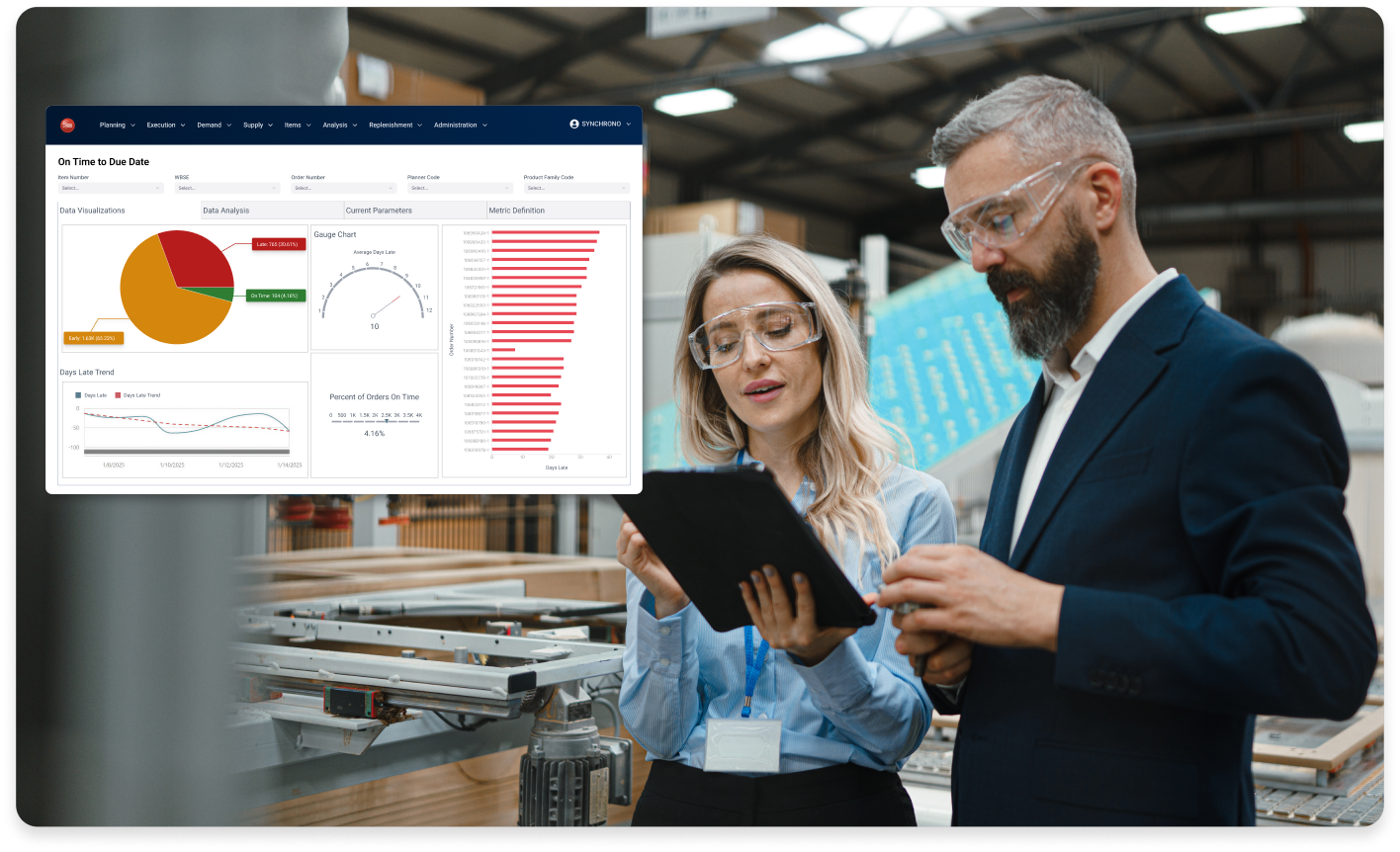
Unlocking the Strategic Value of BI Dashboards for Production KPIs
BI Dashboards in SyncManufacturing® Version 8 deliver real-time visibility into production performance, model accuracy, and schedule adherence for discrete, complex manufacturers. Designed for operations leaders, plant managers, industrial engineers, planners, and schedulers, these dashboards transform live manufacturing data into actionable insights that support continuous improvement, better on-time delivery, and more efficient use of constrained resources. The Benefits of BI in Production Manufacturers
-
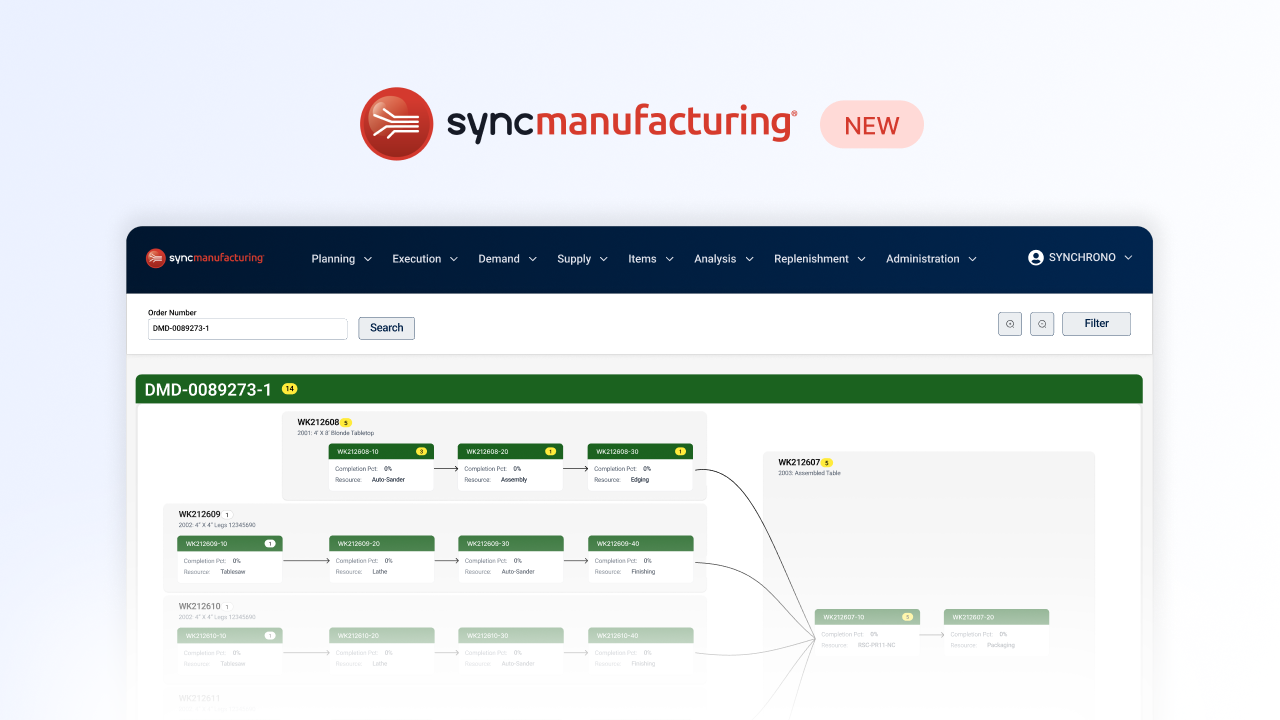
Synchrono Releases SyncManufacturing Version 8
More Visibility, More Power, More Control for Even the Most Complex Manufacturing Environments Synchrono® is excited to share what’s new in SyncManufacturing® Version 8, a release shaped by the real-world challenges and ideas of manufacturers like you. With improved operational visibility, smarter controls, streamlined production planning, a modernized technology platform, and several user-driven enhancements, Version 8 delivers a powerful, more intuitive experience across
-
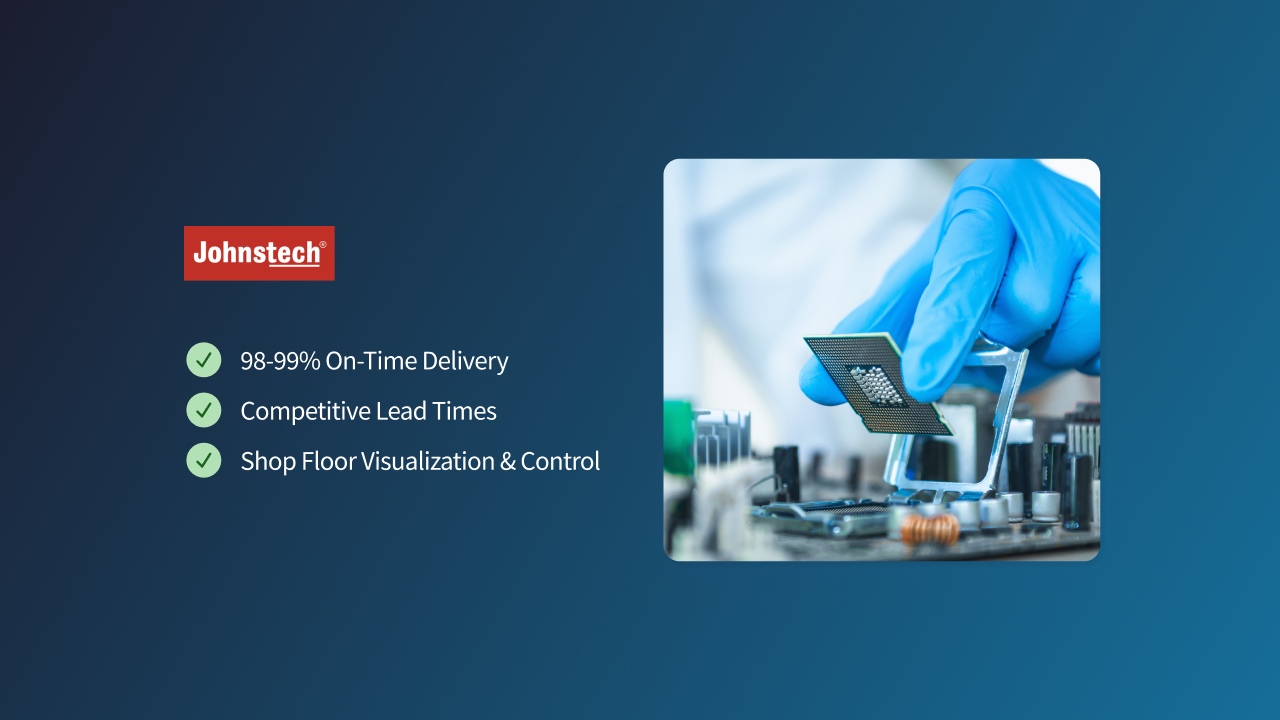
How Johnstech Reduced Lead Times by 50%
The semiconductor industry is competitive, with efficiency and reliability being paramount for success. Johnstech International has consistently delivered results that surpass industry standards, most notably achieving a remarkable reduction in lead times to just 3-4 weeks, compared to the typical industry standard of 5-8 weeks. This achievement underscores their use of advanced planning, scheduling, and
-

Strategic Prioritization: The Manufacturing Leader’s Guide to Operational Excellence
Manufacturing organizations face an uncomfortable truth: having the capacity to produce something doesn’t mean you should. Every resource allocation decision—from accepting sales orders to scheduling production runs—directly impacts your bottom line. Without strategic prioritization driving these decisions, even the most sophisticated manufacturing operations can spiral into inefficiency, missed deadlines, and diminished profitability. Strategic prioritization extends far beyond simple task management or
-
What’s the Difference Between a Manufacturing Bottleneck and a Constraint?
Bottlenecks and constraints are two terms that are often used interchangeably in Demand-Driven Manufacturing as well as in discussions on Lean Manufacturing and flow. It’s easy to use one term when you actually mean the other. However, since these two limiters on throughput need to be addressed differently, it’s important to understand the distinction. What
-
The Best Time to Kick Off a Continuous Improvement Initiative
Prosperity is perhaps one of the greatest obstacles to continuous improvement in manufacturing. When things are going well, we don’t feel the need to make improvements quite as keenly. For example, instead of focusing on removing waste in our factories to become more cost competitive, we might opt to add capacity so we can keep