
Category: Constraints Management
-
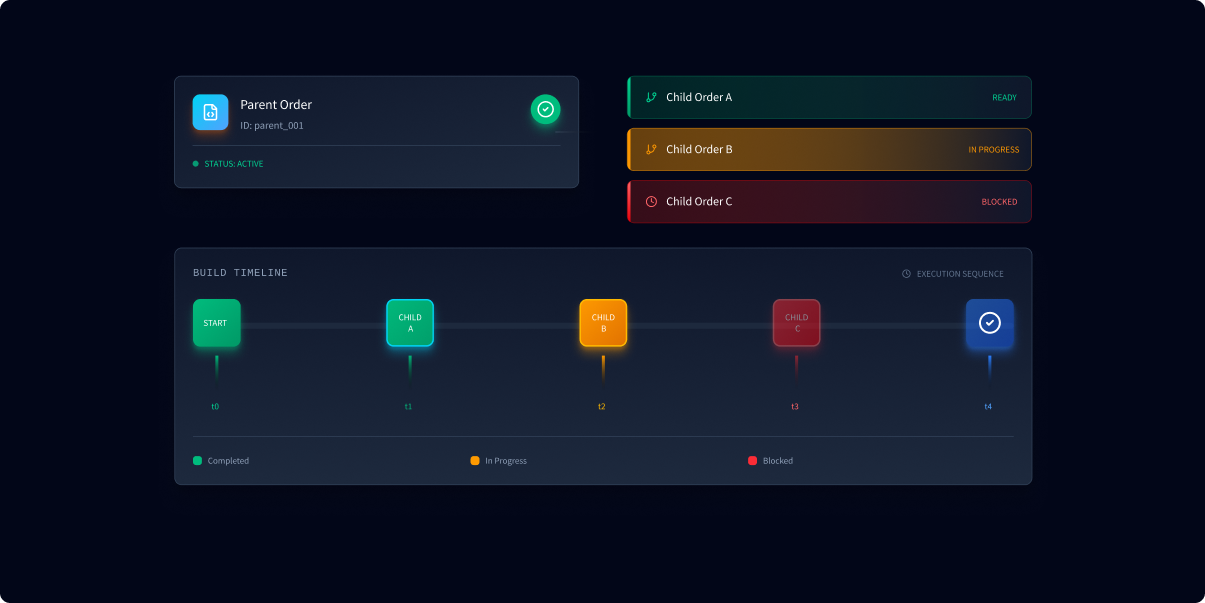
Synchronized Manufacturing: Using Supply Allocation to Orchestrate Complex Build Structures
It’s amazing to watch a school of fish swimming—each one turning, accelerating, and slowing in perfect unison, as if they were a single organism. Their very survival depends on synchronization. Staying tightly coordinated lets them react instantly to predators, shift around obstacles, and navigate a vast, unpredictable ocean. Complex manufacturing environments work much the same way.
-

ATP vs. CTP: What’s the Difference and Why Does it Matter?
Table of Contents With global competition intensifying, the number of manufacturers competing for your customers’ business is growing. So how does one create a sustainable advantage in a rapidly shifting competitive landscape? The answer lies in going back to one basic that was as true when the first manufacturer made the first widget as it
-

What’s the Difference Between a Manufacturing Bottleneck and a Constraint?
Bottlenecks and constraints are two terms that are often used interchangeably in Demand-Driven Manufacturing as well as in discussions on Lean Manufacturing and flow. It’s easy to use one term when you actually mean the other. However, since these two limiters on throughput need to be addressed differently, it’s important to understand the distinction. What
-

Smart Capital Investing in a Recovering Economy
Earlier this year, the MAPI Foundation increased their projection for manufacturing sector growth for 2018 – 2021 from 1.5% to 2.8%. We haven’t seen overall growth like that in a long time, and it should spell a welcome relief for many manufacturers. Capital Spending: A Leading or Lagging Indicator of Profitability? One of the metrics
-

Fast Results Using TOC for Demand-Driven Manufacturing – Part Two
Manufacturers use constraints management first to gain the most demand-driven change Last time, we talked about focusing on enterprise improvements rather than local efficiencies using constraints management (TOC). We discussed that continuous improvement tools such as TOC, Lean and Six Sigma work like “sandpaper” on an organization’s processes, smoothing various stages of their demand-driven journey.
-

How the Internet of Things Can Shorten Lead Times
A new study in Modern Materials Handling reports that 86% of industrial organizations are currently adopting IoT (Internet of Things) solutions, and 84% believe those solutions are very or extremely effective. Manufacturers lagged behind the industrial segment as a whole, with only 77% of manufacturers implementing IoT in their facilities. So, what is holding manufacturers